Historic Preservation & Interpretation: Bringing Local History to Life
Preserve the places. Preserve the stories. Jerzoda helps communities create interactive historic interpretation experiences that connect historic locations with signage, historical information, photographs, digital storytelling, and a digital historian.
What Is Historic Preservation?
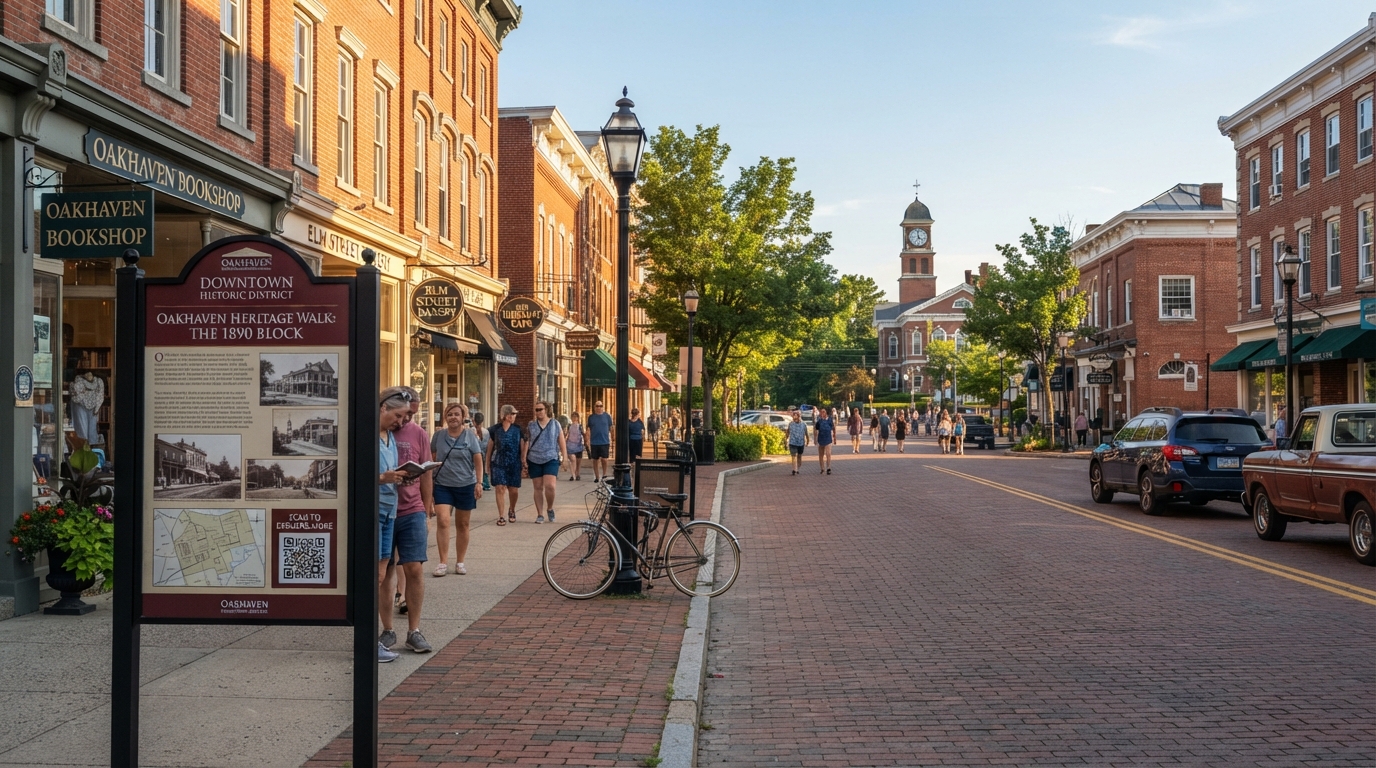
Historic preservation is the effort to identify, protect, maintain, document, and share places and resources that have historical, cultural, architectural, or community significance. Preservation can involve historic buildings, historic districts, landmarks, cemeteries, churches, schools, homes, businesses, industrial sites, transportation sites, parks, monuments, archaeological resources, historic landscapes, and community gathering places.
Every community has its own collection of historic resources. The challenge is often helping residents and visitors understand the stories behind them.
What Is Historic Interpretation?
Historic interpretation is the process of helping people understand the significance of a historic place, event, person, object, or story. Interpretation can take many forms: historic markers, interpretive signs, museum exhibits, walking tours, heritage trails, brochures, maps, photographs, audio experiences, digital experiences, and guided tours.
A modern heritage trail can combine several of these approaches into one connected experience.
From Historic Marker to Interactive Interpretation
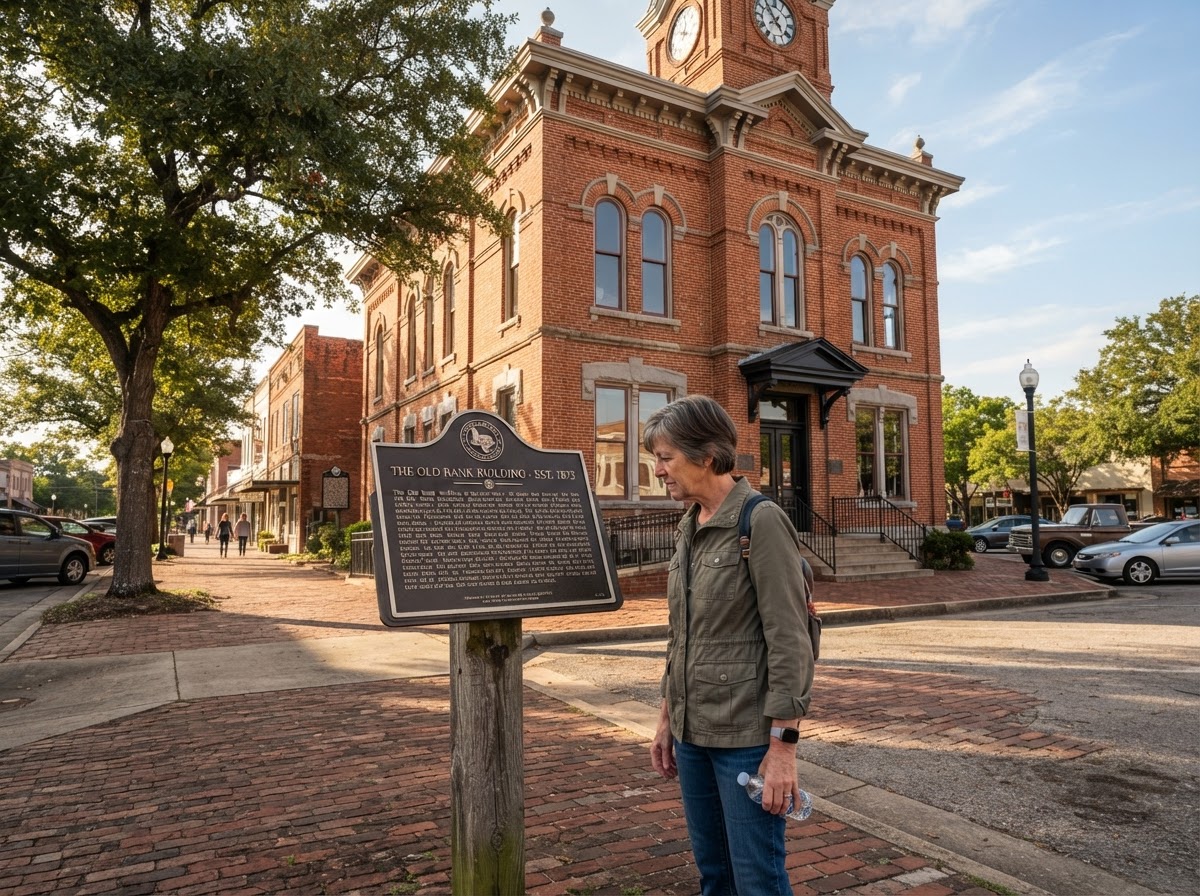
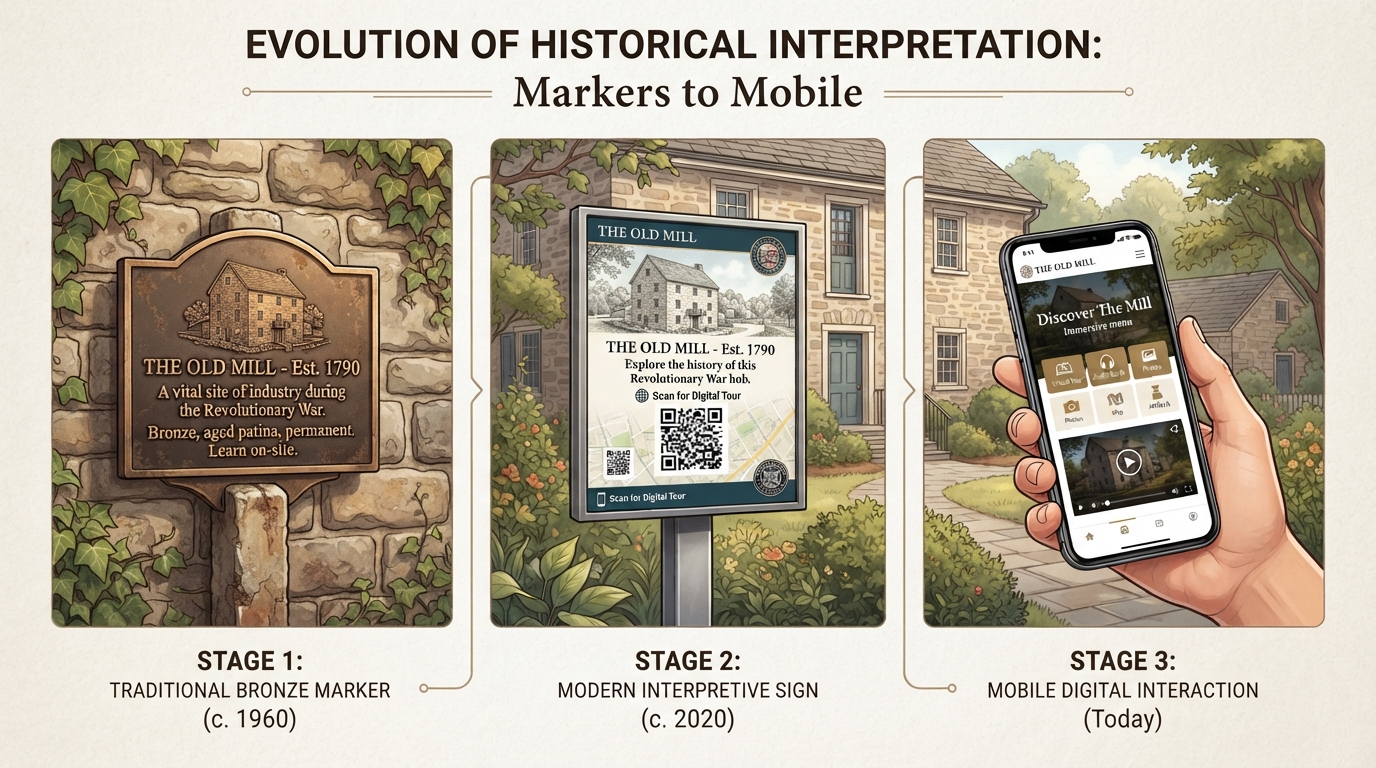
A traditional historic marker provides information at a specific location. An interactive heritage trail can provide a much deeper experience. A visitor can scan a QR code and access historical information, photographs, stories, additional context, related locations, community recollections, and a digital historian.
Instead of asking visitors to simply read and move on, the digital layer gives them an opportunity to explore. The physical sign remains an important part of the experience. The digital layer expands what that sign can provide.
Why Local Historical Organizations Matter
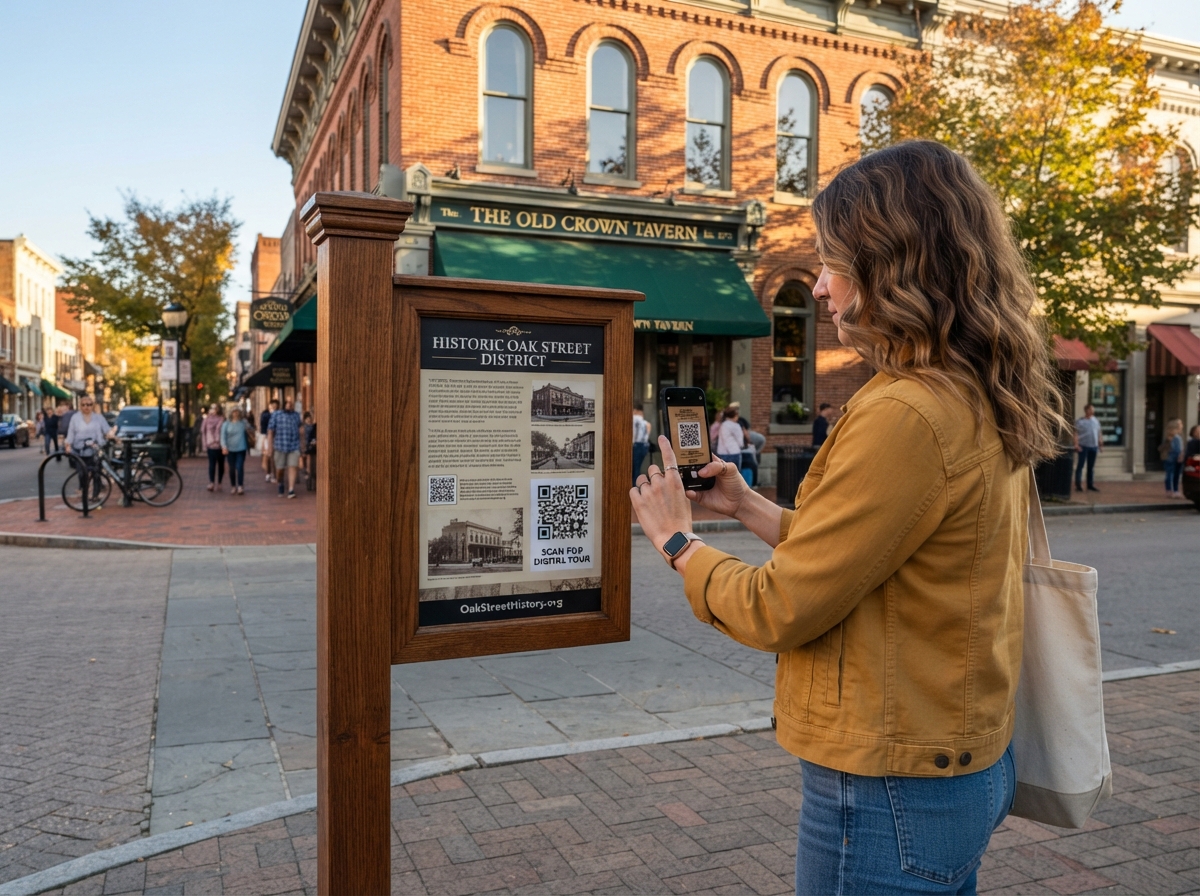
Local historical societies and preservation organizations play an important role in protecting and interpreting community history. They often possess knowledge and resources that cannot be found through a simple internet search. This can include historical photographs, family records, local documents, newspaper archives, oral histories, historic maps, building histories, genealogical information, and knowledge of local people and events.
Jerzoda's role is not to replace local historians. It is to help organize and present that knowledge through a modern heritage-trail experience. Historical organizations can review and authenticate historical information before it becomes part of the trail.
A Collaborative Approach to Historic Interpretation
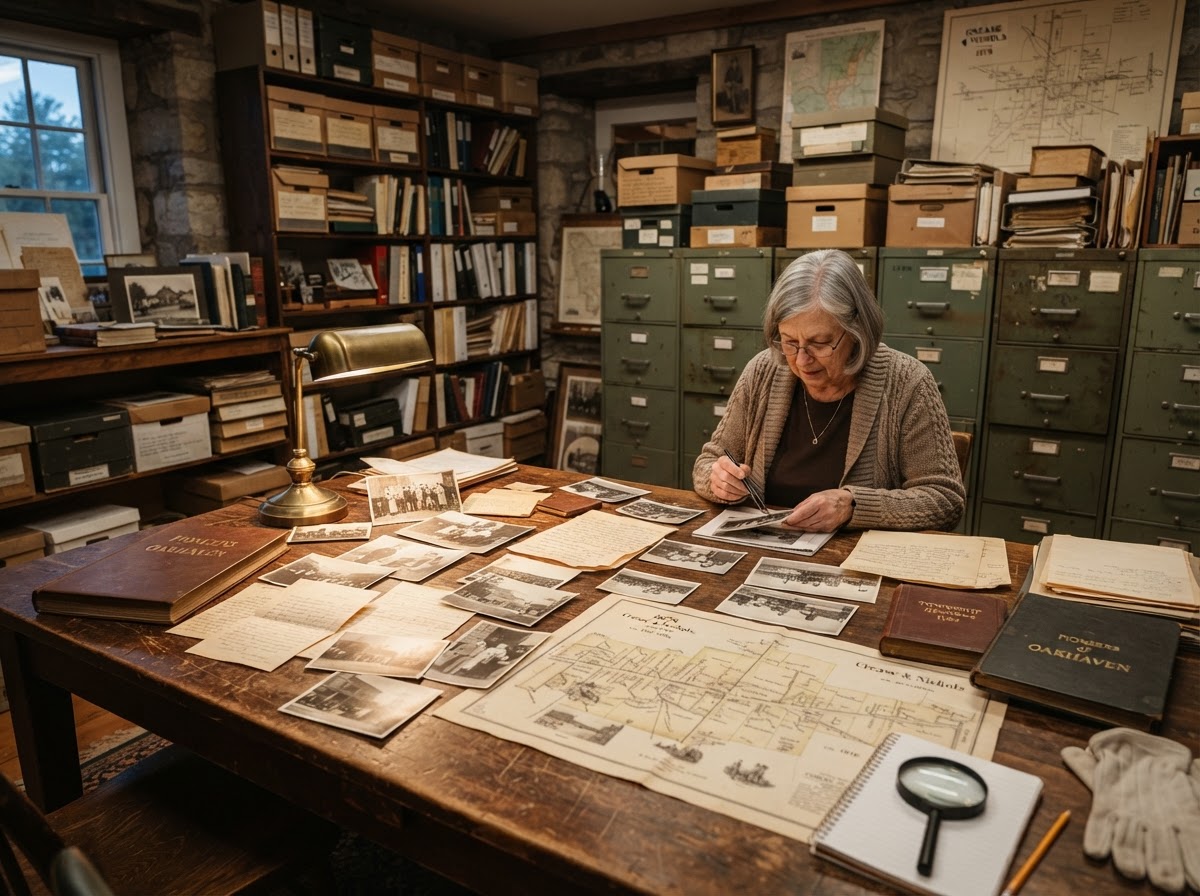
Jerzoda's community heritage trail model divides responsibilities between the people who know the community and the technology that helps present its history.
Jerzoda
- Conducts preliminary historical research
- Develops the trail route
- Coordinates the digital experience
- Creates the digital historian
- Provides trail signage
- Provides GPS locations for proposed sign installations
- Organizes the trail development process
Local Historical Organization
- Reviews historical information
- Corrects inaccuracies
- Provides local knowledge
- Authenticates historical information
- Provides relevant photographs and resources
Municipality
- Coordinates appropriate permissions
- Handles utility or dig-clearance requirements
- Installs posts and signs
- Handles local physical infrastructure responsibilities
Community
- Contributes stories and memories
- Helps identify important places
- Participates in promotion
- Supports the trail through local involvement
This division allows each participant to contribute what they know best.
Preserving Community Memory
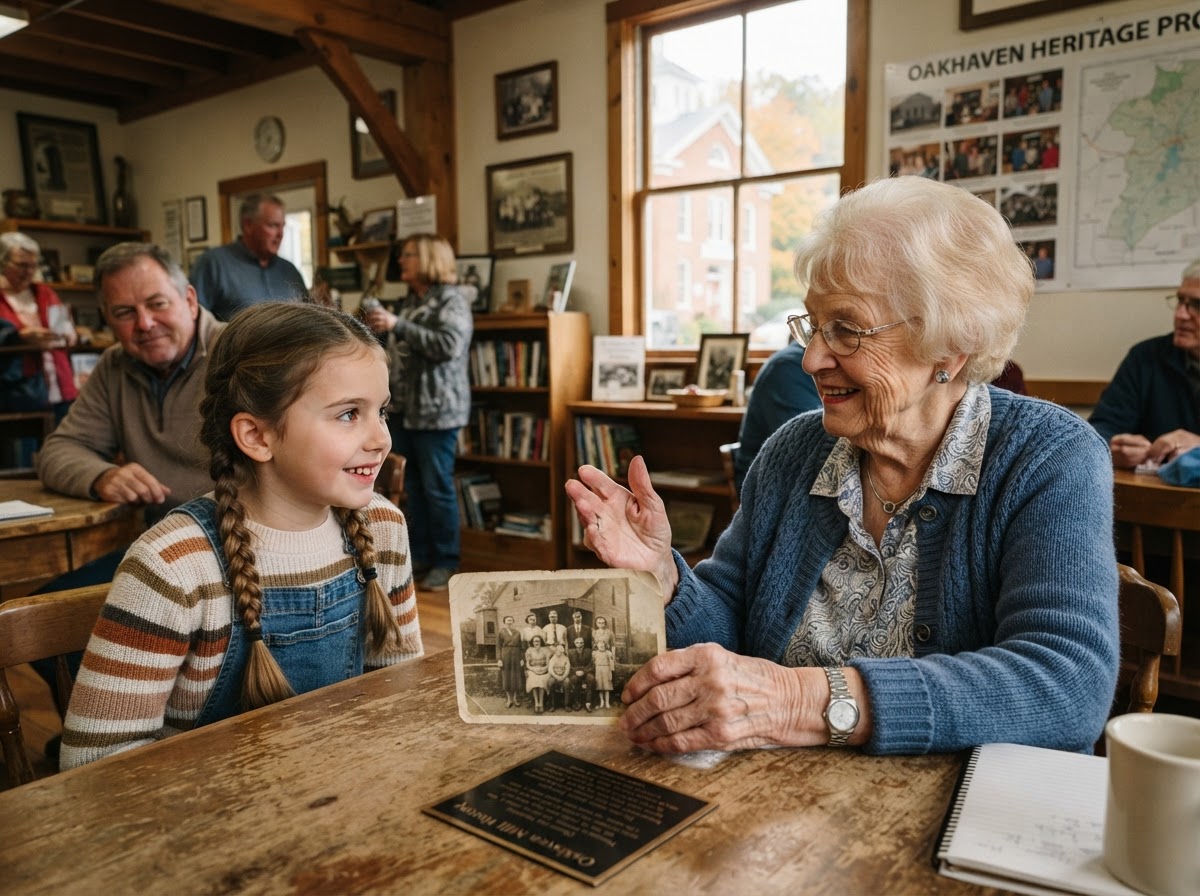
Official historical records tell only part of a community's story. People also remember places through personal experience. A former business owner may remember the people who worked there. A lifelong resident may remember what a street looked like decades ago. A family may have photographs that have never appeared in a public archive. A former student may remember a school before it changed.
These personal memories can become an important part of community history. Jerzoda's moderated Recollections experience provides a place for community members to submit memories connected to trail locations. Submissions are moderated before publication. Personal recollections should be presented as recollections rather than automatically treated as independently verified historical facts. This distinction allows communities to preserve personal memories while maintaining responsible historical interpretation.
Create an Evolving Archive of Local History
A printed brochure has a fixed amount of space. A traditional marker has a fixed amount of space. A digital heritage trail can continue to evolve. As additional historical information becomes available, the digital experience can be updated. As residents contribute recollections, the community archive can grow. As photographs are discovered, they can potentially be incorporated. As future generations add their own memories, today's community becomes part of tomorrow's historical record.
This creates an evolving archive connected directly to the places where the stories occurred.
Historic Preservation for the Next Generation
Preservation is not only about looking backward. It is also about making history accessible to the people who will carry it forward. A young person walking through a historic district may not recognize why a building matters. A visitor may walk past an important location without knowing its story. A resident may have lived in town for decades without discovering the history directly outside their door.
Interpretive signage and digital experiences can create opportunities to make that history easier to discover. Jerzoda's goal is to make local history accessible without removing it from the places where it happened.
Historic Districts & Downtown Interpretation
Historic districts and traditional downtowns often contain numerous stories within a relatively small geographic area. Buildings may represent local businesses, important families, industries, transportation, architecture, government, community organizations, education, commerce, and social history.
A heritage trail can connect these locations into a single walking experience. Instead of viewing historic sites individually, visitors can begin to understand how the locations connect to one another and to the development of the community.
Interpretive Signage That Leads Somewhere
A historic sign does not have to be the end of the story. With a QR-enabled heritage trail, the physical sign can become the starting point. A visitor sees the sign. They scan it. The digital experience opens. The story expands. The visitor can explore additional information and continue to the next historic location.
The result is a connected interpretation experience rather than a collection of unrelated markers.
Community History Belongs to the Community
Jerzoda does not believe every community should tell its history in exactly the same way. The technology and development process can be standardized. The history should remain local. Each community determines which places matter. Local historical organizations help establish historical accuracy. Residents contribute memories. Local photographs and stories help create the character of the trail.
That is what makes each heritage trail different. The framework is repeatable. The story is unique.
How Jerzoda Supports Historic Preservation Projects
Identify
Identify historically significant locations that could become part of a walking route.
Research
Jerzoda prepares preliminary historical research for proposed trail stops.
Authenticate
Local historical organizations review and authenticate the historical information.
Interpret
Historical information is developed into accessible trail content.
Connect
Physical signage connects each location to the digital experience.
Preserve
Community recollections and additional historical information can continue to build the digital archive over time.
Walton Heritage Trail
The Walton Heritage Trail in Walton, New York provides the working example of the Jerzoda community heritage trail model. The project demonstrates how local history, historical research, physical signage, digital interpretation, community participation, and local business involvement can be brought together into one experience. The Walton project helped establish the process Jerzoda is now making available to other communities.
Historic Preservation Meets Modern Technology
Technology does not replace preservation. It can help make preserved history easier to discover. A historic building remains a historic building. A historic photograph remains a historic photograph. A community's story remains its story. Jerzoda simply adds another way for people to access, explore, and interact with that information.
The goal is not to make history feel like technology. The goal is to use technology to make history feel alive.
Could Your Community's Historic Resources Become a Heritage Trail?
Jerzoda offers an initial heritage trail assessment at no charge. A strong candidate generally has seven or more appropriate historic locations within approximately a two-mile walkable area, reasonable pedestrian accessibility, a logical route, historical information that can be researched and authenticated, and a community willing to participate.
Explore Related Heritage Trail Resources
The main pillar page for Jerzoda's heritage trail platform.
Historic Walking Tours & Heritage TrailsSelf-guided historic tours and community heritage trails.
Additional spoke pages for heritage tourism, downtown revitalization, grants & funding, and digital historians are coming soon.
Frequently Asked Questions About Historic Preservation & Interpretation
What is historic interpretation?+
Historic interpretation is the process of helping people understand the meaning and significance of a historic place, person, event, structure, object, or story. It can include signs, markers, exhibits, tours, photographs, maps, and digital experiences.
What is the difference between historic preservation and historic interpretation?+
Historic preservation focuses on protecting and maintaining historically significant resources. Historic interpretation focuses on helping people understand and experience the significance of those resources.
What is interpretive signage?+
Interpretive signage provides information that helps visitors understand the history or significance of a particular place, structure, landscape, or event.
Can historic markers include QR codes?+
Yes. QR codes can connect physical historic markers or interpretive signs to digital information, photographs, stories, maps, and interactive experiences.
How can a historical society participate in a heritage trail?+
A historical society can help identify important locations, review and authenticate historical information, provide photographs and local knowledge, and help ensure that the trail accurately represents the community's history.
Can residents contribute to historic preservation?+
Residents can contribute photographs, documents, memories, family histories, and other information that may help communities preserve and interpret local history. Jerzoda's moderated Recollections experience provides a way for residents to submit personal memories connected to trail locations.
Are community recollections considered verified historical facts?+
Not necessarily. Recollections are personal memories and should be presented as such. Jerzoda moderates submissions before publication so the community can preserve personal stories while maintaining responsible historical interpretation.
Can a historic district have a heritage trail?+
Yes. Historic districts can be strong candidates for heritage trails because multiple historically significant locations may be concentrated within a walkable area.
Can a heritage trail help preserve local history?+
A heritage trail can provide another way to document, interpret, and share local history. The digital component can also allow communities to add additional information and moderated recollections over time.
How does Jerzoda work with historical societies?+
Jerzoda conducts preliminary research and develops proposed trail content. Local historical organizations can then review, correct, authenticate, and supplement the information before it becomes part of the public trail experience.
Does Jerzoda replace a historical society?+
No. Jerzoda provides the technology, trail-development framework, research process, signage, and digital experience. Local historical organizations provide important historical knowledge, review, authentication, and community context.
How can my community explore a Jerzoda heritage trail?+
Jerzoda provides an initial assessment at no charge to determine whether a community appears to meet the basic criteria for a potential heritage trail. Interested communities can contact Jerzoda to begin the conversation.
Make Your Community's History Accessible
Contact Jerzoda to discuss how a heritage trail could help your community preserve, interpret, and share its historic resources.
Talk to Jerzoda About Your Community