Heritage Tourism & Visitor Experiences That Bring Local History to Life
Give visitors a reason to walk into your history. Jerzoda helps communities connect their historic locations through interactive heritage trails that combine physical signage, digital storytelling, photographs, and a digital historian — creating a self-guided experience that allows visitors to explore local history at their own pace.
What Is Heritage Tourism?
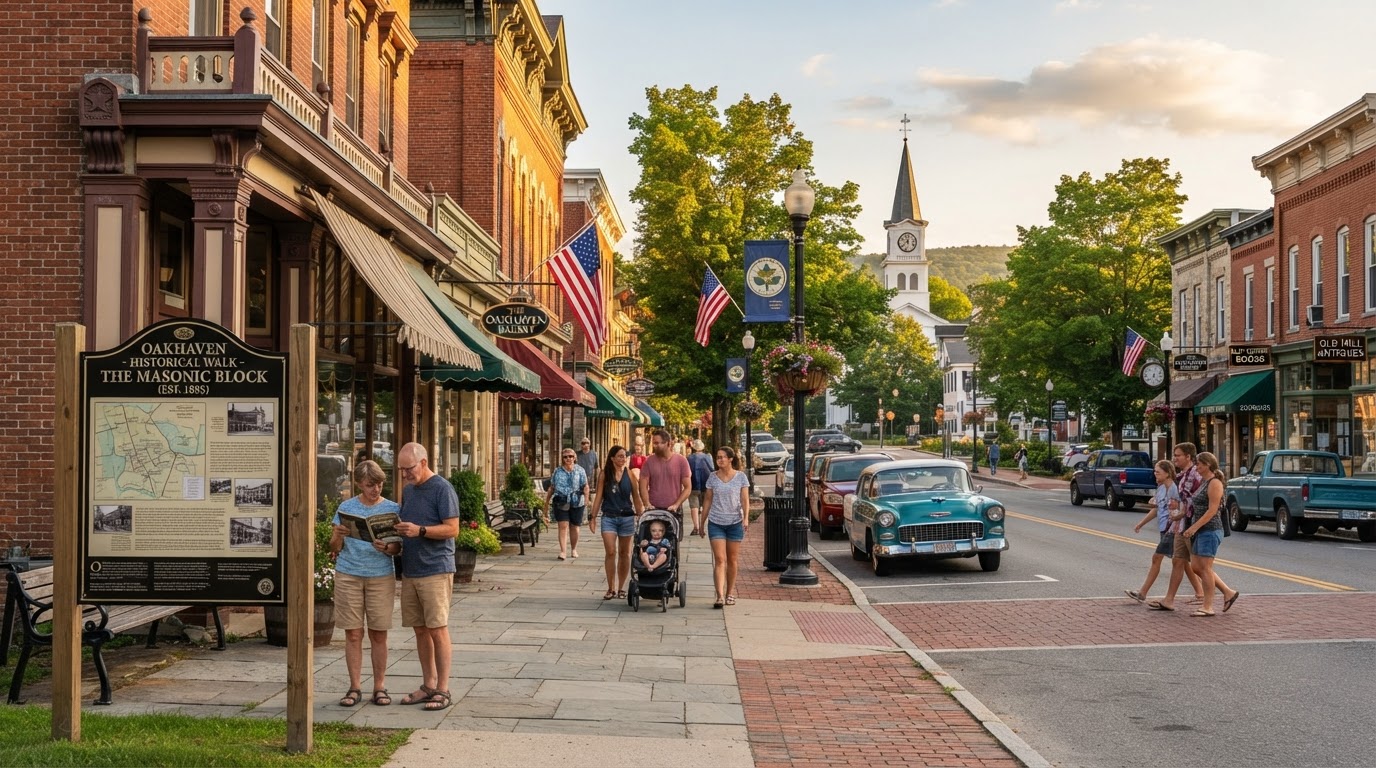
Heritage tourism is travel centered around the history, culture, traditions, architecture, stories, and places that help define a destination. Heritage tourism can include historic districts, historic buildings, museums, cultural sites, historic downtowns, heritage trails, walking tours, cemeteries, historic transportation sites, local landmarks, cultural events, historic landscapes, and community stories.
Not every heritage tourism experience needs to be a large attraction. Sometimes the most meaningful experiences are found by walking through the community itself.
Why Local History Can Become a Visitor Experience
Visitors often want more than a list of places to see. They want to understand the places they are visiting. A historic walking trail can provide context by connecting individual locations into a larger story.
Instead of simply passing a historic building, a visitor can learn: Why is this building important? Who was connected to it? What happened here? How did it affect the community? What other locations are connected to its story? That turns local history into an experience rather than simply information.
Heritage Trails Turn Historic Sites Into a Walkable Experience
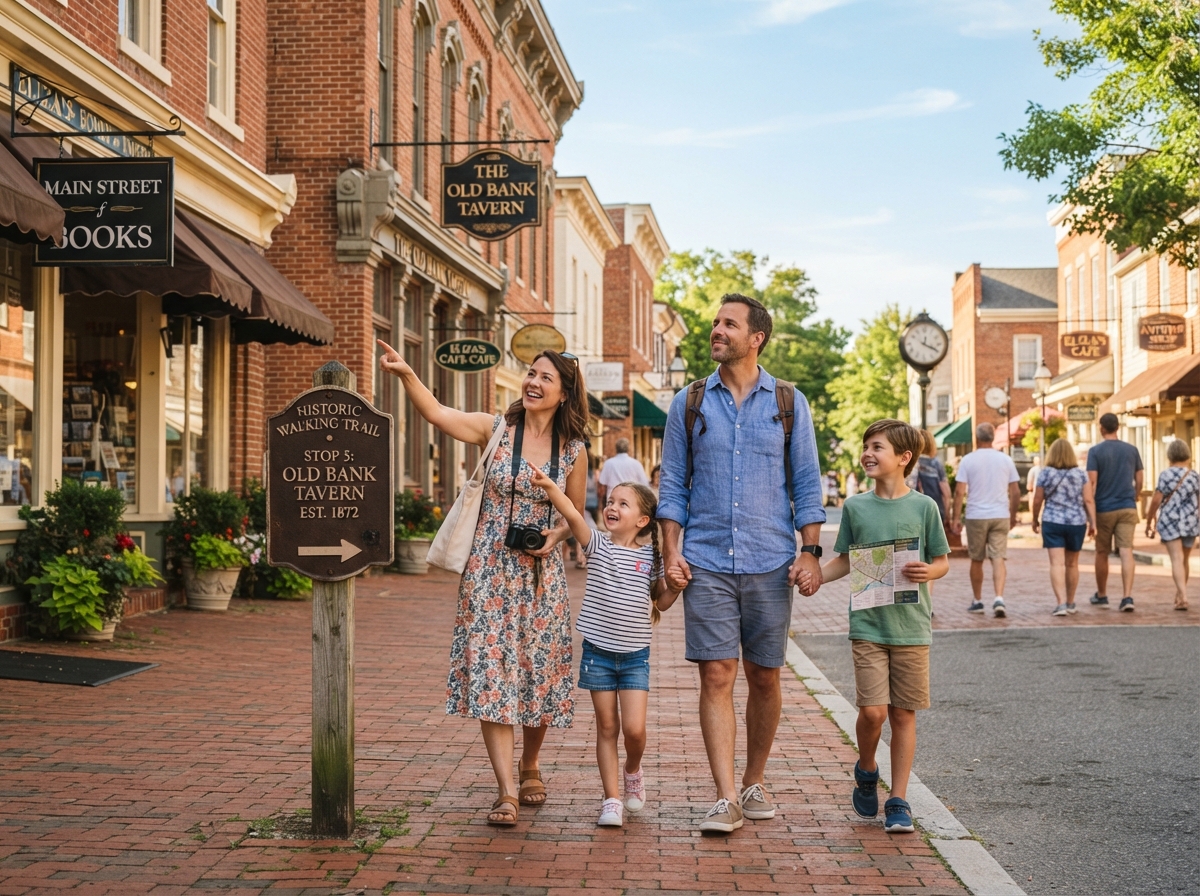
A community may already have numerous historic resources. The challenge is often connecting them. A heritage trail creates a physical route that encourages visitors to move from one location to another.
A typical experience may look like:
- Visitor discovers the trail.
- Visitor begins at a trail stop.
- Visitor scans the sign.
- Digital history opens on their phone.
- Visitor explores the story.
- Visitor walks to the next location.
- Visitor discovers additional local history.
- Visitor continues exploring the community.
The trail creates a reason to move through the community rather than simply drive past it.
The Digital Layer Makes History More Accessible
Traditional walking tours often depend on a brochure, printed map, guide, or scheduled tour. A self-guided digital heritage trail can give visitors access to information using the device they already carry.
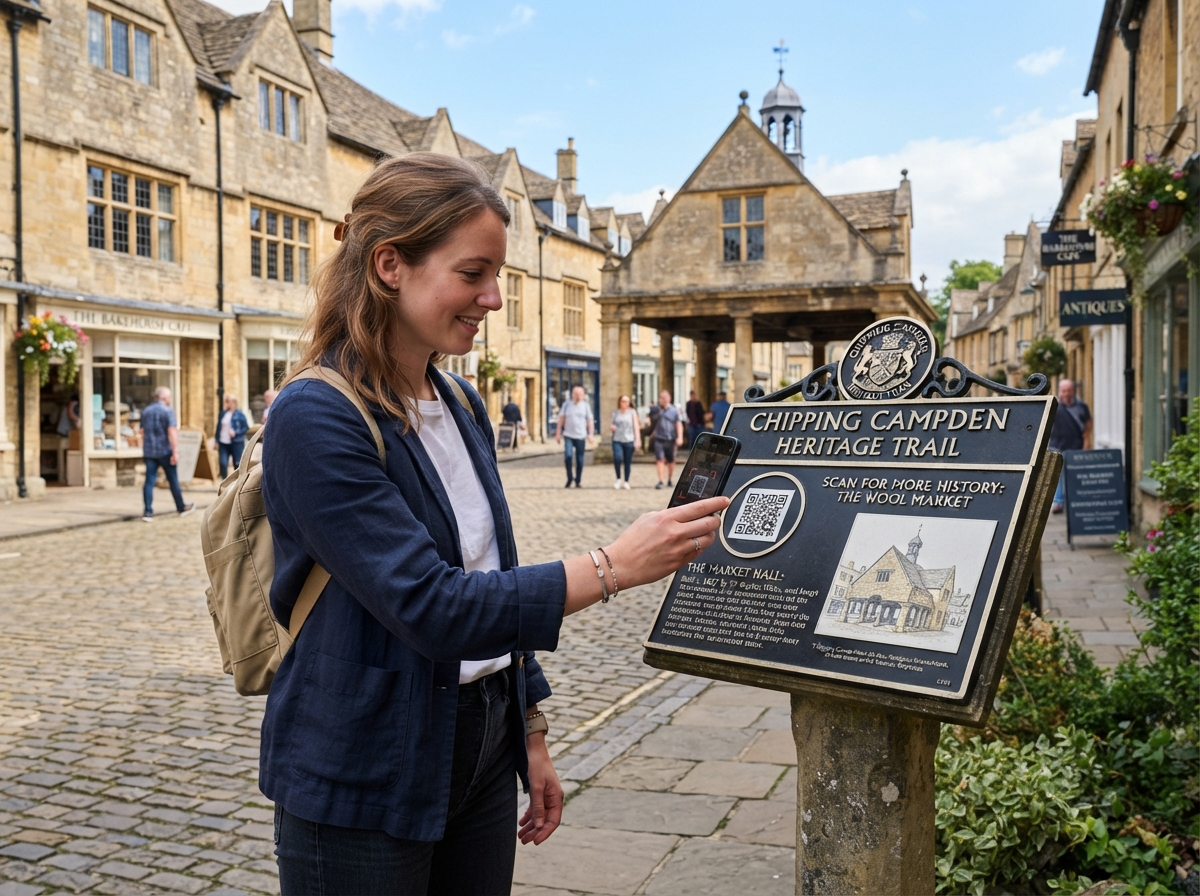
QR-enabled trail signs can connect visitors with historical stories, photographs, maps, additional information, related locations, community recollections, and a digital historian. This allows visitors to explore independently while still having access to a deeper layer of information.
A Digital Historian Along the Walking Route
Imagine a visitor standing at a historic location and wondering: "Why is this building important?" Instead of needing to find a museum or wait for a scheduled tour, the visitor can interact with the trail's digital historian.
The digital experience can help visitors explore the history associated with that location and answer questions based on the information available for the trail. This creates a more interactive visitor experience while keeping the physical historic location at the center. Jerzoda's approach is simple: make the signs talk.
Heritage Tourism Starts With Authentic Local Stories
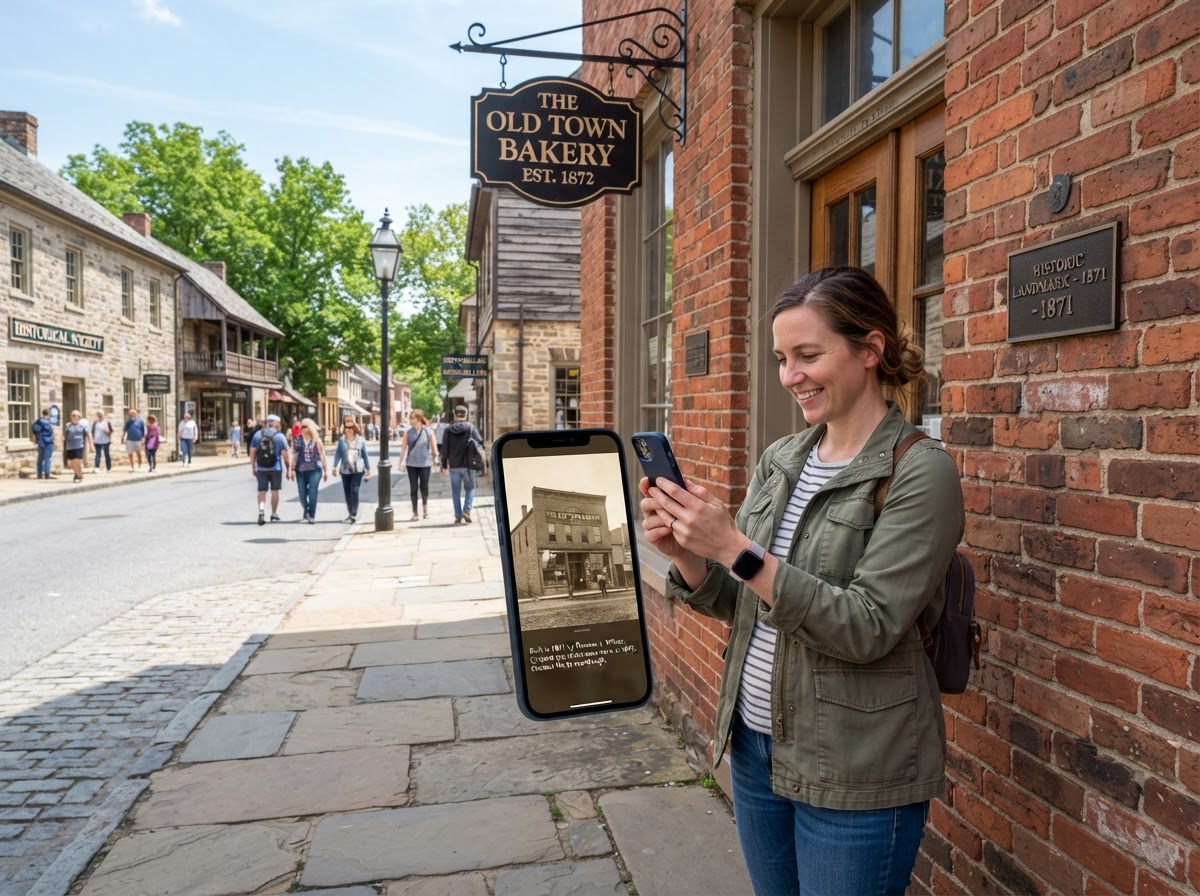
Tourism experiences are stronger when they reflect the actual character of the community. Jerzoda does not create generic history and apply it to every town. Each trail begins with the community's own historic resources.
Local historical organizations can help authenticate the information. Local photographs can help illustrate the stories. Residents can contribute personal recollections. The result is a visitor experience built around the actual places and stories that make that community different from every other community.
Community Recollections Add a Human Layer
Historical records tell visitors what happened. Community recollections can help visitors understand what a place meant to the people who lived there. Jerzoda's moderated Recollections experience allows residents to submit personal stories and memories connected to trail locations.
A recollection might describe a family business, a childhood memory, a former community gathering place, a historic event remembered by a resident, a building that has changed over the years, or a person who played an important local role. Submissions are moderated before publication. Personal recollections are presented as personal memories rather than automatically being treated as independently verified historical facts.
Over time, the trail can become an evolving archive of community memory.
Heritage Trails and Local Businesses
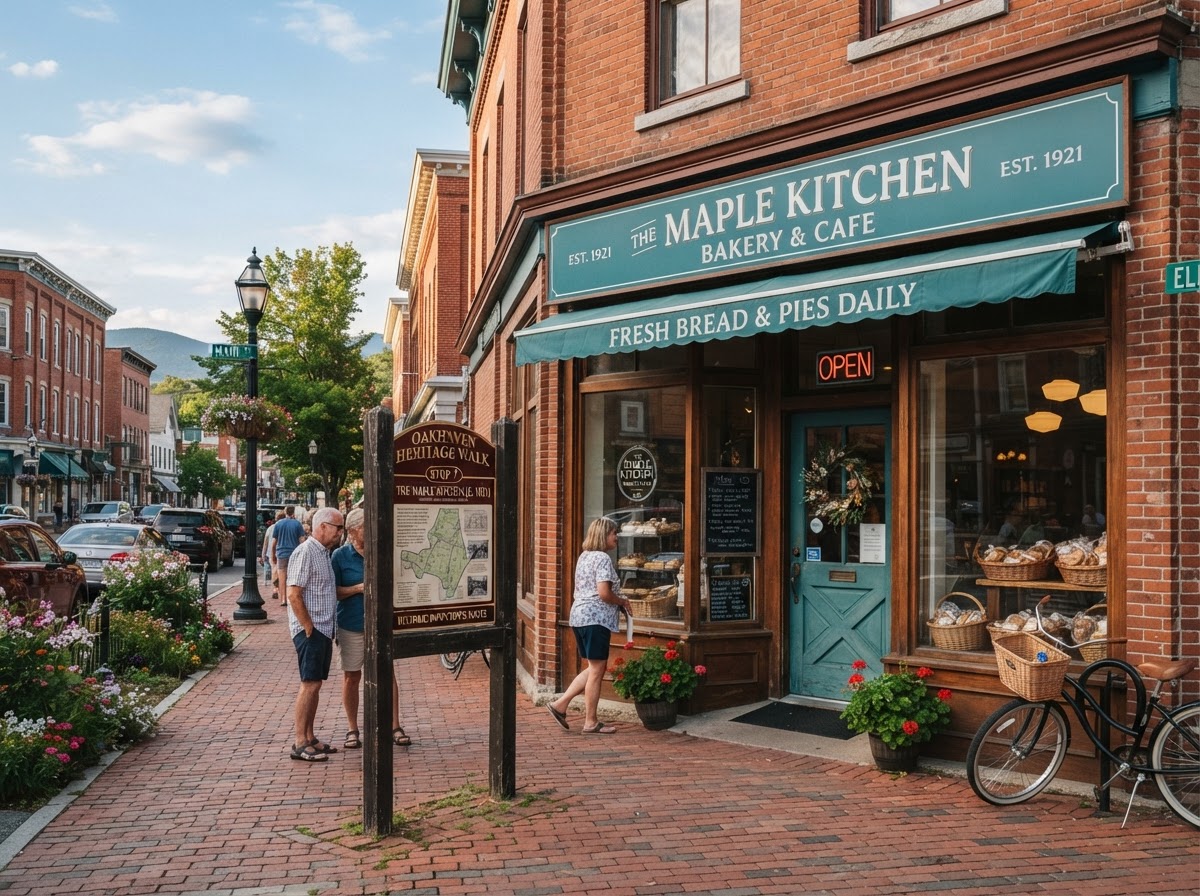
A walking trail can create opportunities for visitors to discover businesses located along or near the route. Jerzoda's Trail Savers program gives participating trail sponsors an opportunity to offer a visitor savings incentive.
The purpose is to create a connection between the heritage experience and participating local businesses. The trail is not presented as a guarantee of new customers, increased revenue, or positive reviews.
Trail Savers Connect Visitors With the Community
A visitor exploring a heritage trail is already discovering the community. Trail Savers provides participating sponsors with a way to welcome those visitors into their businesses.
The concept is simple:
- Explore the trail.
- Discover local history.
- Visit participating businesses.
- Use an available Trail Savers offer.
- Experience more of the community.
This creates an opportunity for the trail and local businesses to become part of the same visitor experience.
Heritage Tourism Can Support Community Identity
Tourism isn't only about attracting people from somewhere else. A strong local tourism experience can also give residents a new way to see their own community.
A heritage trail can help highlight local history, encourage residents to explore historic locations, give visitors another reason to stop, create a shared community experience, connect historical organizations with tourism efforts, connect local businesses with visitors, and preserve community stories. A trail becomes part of the community's identity rather than simply another tourism advertisement.
Historic Downtowns Are Natural Heritage Trail Destinations
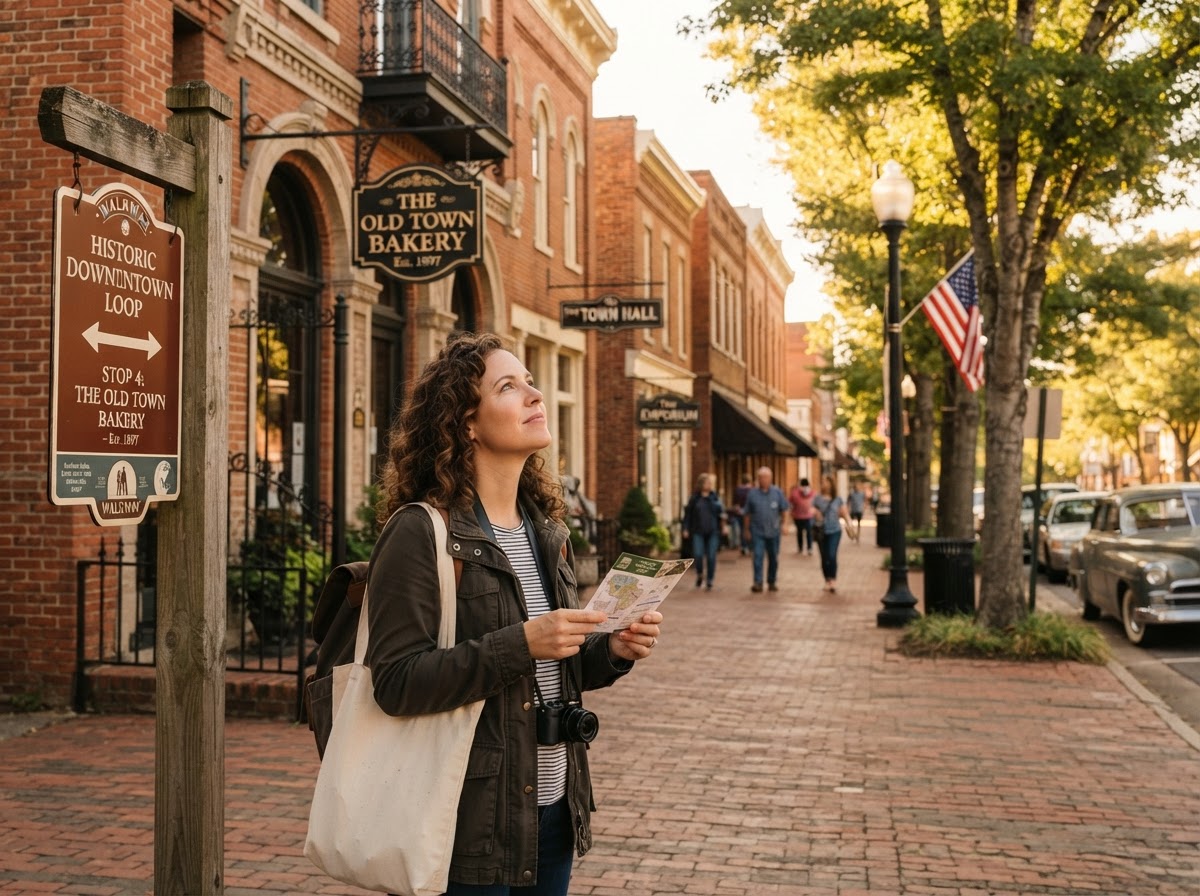
Many communities already have the ingredients for a heritage tourism experience. Historic downtowns often contain multiple buildings and locations connected to the community's development.
A heritage trail can connect historic businesses, government buildings, churches, schools, homes, hotels, transportation sites, public spaces, industrial history, important people, and community organizations. Walking from location to location allows visitors to experience the downtown as a story rather than a collection of buildings.
Heritage Tourism Doesn't Have to Be Complicated
A community does not need a large museum or major tourist attraction to begin interpreting its history for visitors. A meaningful heritage experience can start with a collection of historic locations that are close enough to walk, historically significant, accessible to visitors, connected by a logical route, and supported by reliable historical information.
Jerzoda generally looks for at least seven appropriate historical locations within approximately a two-mile walkable area. The initial assessment is provided at no charge.
How Jerzoda Helps Create a Heritage Tourism Experience
Assess
Jerzoda evaluates whether the community appears to have enough appropriate historic locations within a walkable area.
Map
The historic locations are organized into a logical walking route.
Research
Jerzoda prepares preliminary historical research for the proposed trail stops.
Authenticate
Local historical organizations review and authenticate the historical information.
Build
Jerzoda develops the digital experience and provides the physical trail signage.
Experience
Visitors walk the route, scan the signs, explore the history, interact with the digital historian, and discover the community.
Heritage Tourism Is About More Than Visitors
The best community heritage projects serve more than tourists. They can also serve residents, students, families, local historians, community organizations, business owners, and future generations.
A resident who has lived in town for 30 years may discover a story they never knew. A student may learn about a building they pass every day. A visitor may discover a location they would otherwise have driven past. A family may contribute a recollection that would otherwise have disappeared. That is what makes community heritage tourism different from simply promoting attractions.
A Living Visitor Experience That Can Grow
A heritage trail does not have to be frozen on the day it launches. The digital experience can continue to develop. New recollections can be submitted. Additional historical information can be incorporated. Photographs can be added. Community stories can grow.
The trail becomes both a visitor experience and an evolving community archive. The physical route stays connected to the places that matter. The digital layer gives the community room to tell more of the story.
Walton Heritage Trail: A Working Example
The Walton Heritage Trail in Walton, New York provides the working example of the Jerzoda model. The project demonstrates how local history, physical signage, digital storytelling, community participation, local business involvement, and a walkable route can come together in one community heritage experience. The Walton project is the foundation for the process Jerzoda is now making available to other communities.
Could Your Community Become a Heritage Tourism Destination?
Your community may already have the history. It may already have the buildings. It may already have the stories. It may simply need a way to connect them. Jerzoda provides an initial heritage trail assessment at no charge.
Explore Related Heritage Trail Resources
The main pillar page for Jerzoda's heritage trail platform.
Historic Walking Tours & Heritage TrailsSelf-guided historic tours and community heritage trails.
Historic Preservation & InterpretationInterpretive signage, historic markers, and community history.
Additional spoke pages for downtown revitalization, grants & funding, and digital historians are coming soon.
Frequently Asked Questions About Heritage Tourism & Visitor Experiences
What is heritage tourism?+
Heritage tourism is travel focused on experiencing the history, culture, traditions, architecture, stories, and places that help define a destination.
What is a heritage tourism experience?+
A heritage tourism experience gives visitors an opportunity to explore the history and culture of a community through places, stories, historic sites, walking tours, heritage trails, museums, events, or other cultural resources.
Can a small town benefit from a heritage trail?+
A small town can use a heritage trail as one way to interpret its local history and provide residents and visitors with a self-guided experience. The suitability of a community depends on its historic resources, walkability, accessibility, and local participation.
What is a heritage trail?+
A heritage trail is a route connecting multiple locations that are important to a community's history, culture, architecture, people, or development.
Can a heritage trail attract tourists?+
A heritage trail can provide another experience for visitors who are interested in local history and culture. It should be considered one component of a broader community tourism strategy rather than a guarantee of increased visitation.
How can heritage trails support local businesses?+
Heritage trails can create opportunities for visitors to discover businesses along or near a walking route. Jerzoda's Trail Savers program provides participating trail sponsors with a way to offer visitor savings.
What is Trail Savers?+
Trail Savers is a benefit for participating heritage trail sponsors that provides a way for local businesses to offer visitors a savings incentive while they explore the community.
Can visitors use a heritage trail without a tour guide?+
Yes. Jerzoda heritage trails are designed to provide a self-guided experience using physical signage and digital information that visitors can access while walking the route.
Can a heritage trail include a digital historian?+
Yes. Jerzoda heritage trails can include a digital historian that allows visitors to interact with the historical information associated with the trail.
Can residents participate in a heritage tourism project?+
Yes. Residents can help identify historic locations, contribute local knowledge, participate in community activities, and submit personal memories through the moderated Recollections experience.
Does Jerzoda provide a free heritage trail assessment?+
Yes. Jerzoda provides an initial assessment at no charge to determine whether a community appears to meet the basic criteria for a potential heritage trail.
How many historic locations are needed?+
Jerzoda generally looks for at least seven appropriate historical locations within approximately a two-mile walkable area. Each community is assessed individually.
Turn Your Community's History Into a Visitor Experience
Contact Jerzoda to discuss how a heritage trail could help your community create a self-guided visitor experience built around local history.
Talk to Jerzoda About Your Community