Heritage Trail Funding, Grants & Municipal Project Planning
How communities can fund a heritage trail. A community heritage trail can begin with an idea, but it takes people and resources to turn that idea into a physical project. The good news is that communities do not necessarily have to rely on one source of funding. Municipal participation, local businesses, founding sponsors, community supporters, tourism organizations, civic groups, and grants may all have a role depending on the project. Jerzoda helps communities develop the trail itself while creating opportunities for local participation and sponsorship.
What Does a Heritage Trail Cost?
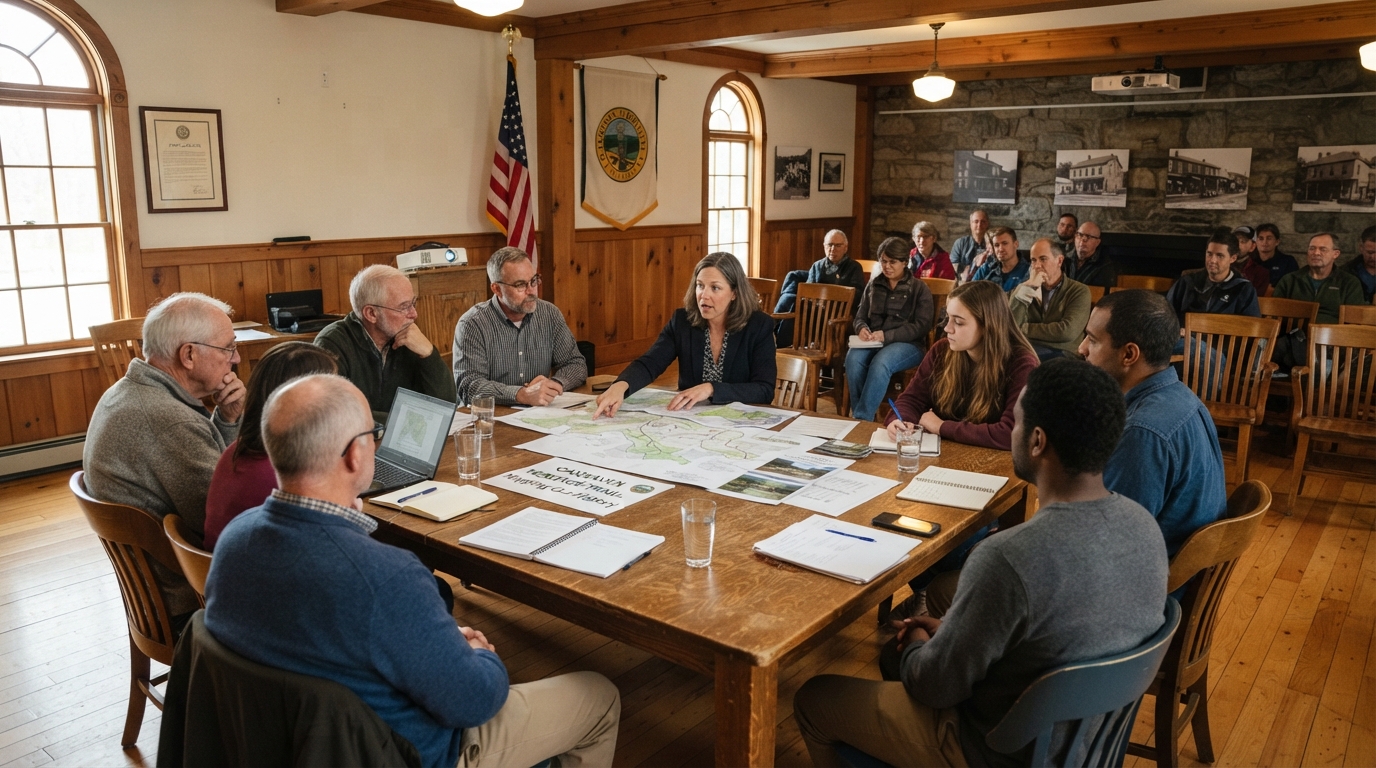
The cost of a heritage trail depends on the community, route, number of signs, installation requirements, materials, and other project-specific factors. Jerzoda does not use this page to publish a universal project price because every community project is different.
The first question is whether the community is a good candidate. Jerzoda provides an initial assessment at no charge. If the project appears appropriate, Jerzoda can discuss the specific scope and costs involved.
Heritage Trail Funding Can Come From Multiple Sources
Communities can consider a combination of funding sources rather than assuming one organization must pay for everything. Potential categories may include municipal funding, local business sponsorships, founding sponsors, community fundraising, tourism organizations, economic development organizations, historical organizations, civic organizations, private contributions, and applicable grants.
Not every source will be appropriate for every community. Funding availability, eligibility, rules, and application requirements vary. Always verify current requirements directly with the organization offering the funding.
Local Business Sponsorships
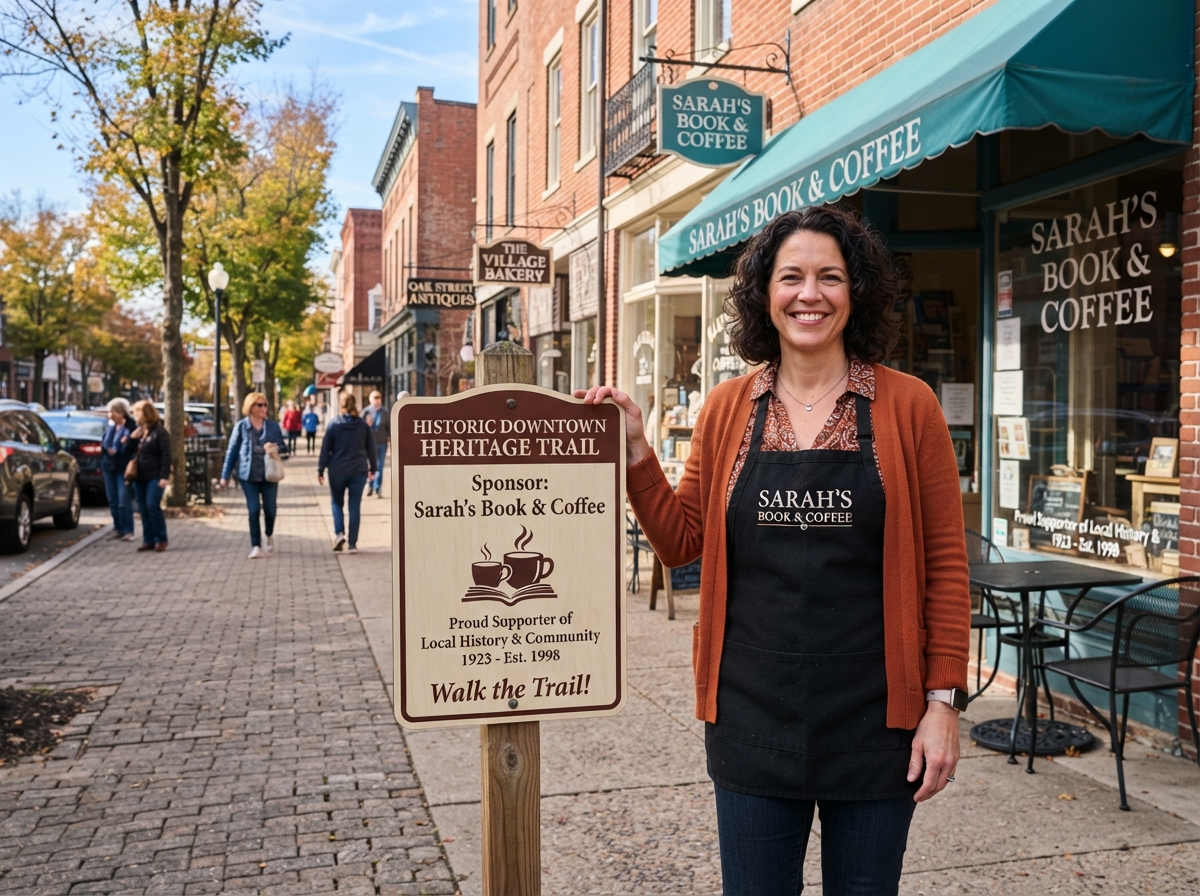
Local businesses can play an important role in helping bring a community heritage trail to life. Jerzoda's model includes Founding Sponsors who help support the trail. In return, participating sponsors can become part of the story of the trail's development and receive the benefits associated with the current sponsorship program. The exact sponsorship structure should be established for each community.
Trail Savers: A Benefit for Trail Sponsors
Jerzoda's Trail Savers program gives participating local businesses an opportunity to provide a savings offer to people exploring the trail. Current offers may include save $2 when spending $20 or save $5 when spending $50.
The concept connects trail sponsorship with participation in the visitor experience. A participating business can support the trail while providing visitors with an incentive to discover the local business community.
Community Founders
Jerzoda's Community Founder program provides another way for residents to participate in supporting their community's heritage trail. Community Founder badges are available through participating local businesses by donation. The business receiving the most Community Founder donations can receive a free trail sign stop, subject to the current program rules.
The program provides a visible way for residents to demonstrate civic pride and participation.
Historic Preservation Grants
Historic preservation grants may sometimes be available through government agencies, foundations, preservation organizations, or other funding entities. Potential grant categories can include projects involving historic preservation, historic interpretation, historic markers, cultural resources, heritage tourism, community development, downtown revitalization, and cultural programming.
Grant programs change. Eligibility requirements change. Deadlines change. Funding priorities change. Therefore, communities should verify all current grant information directly with the funding organization before building a project budget around a particular grant.
Heritage Tourism Funding
Some communities may explore tourism-related funding when a heritage trail is being developed as part of a broader visitor experience. A project may potentially fit within broader efforts involving tourism development, cultural tourism, visitor experiences, historic downtowns, heritage destinations, and community attractions.
Whether a particular funding opportunity applies depends entirely on the current program requirements. Jerzoda can help explain the project and its components, but communities should determine eligibility directly with the funding organization.
Municipal Participation
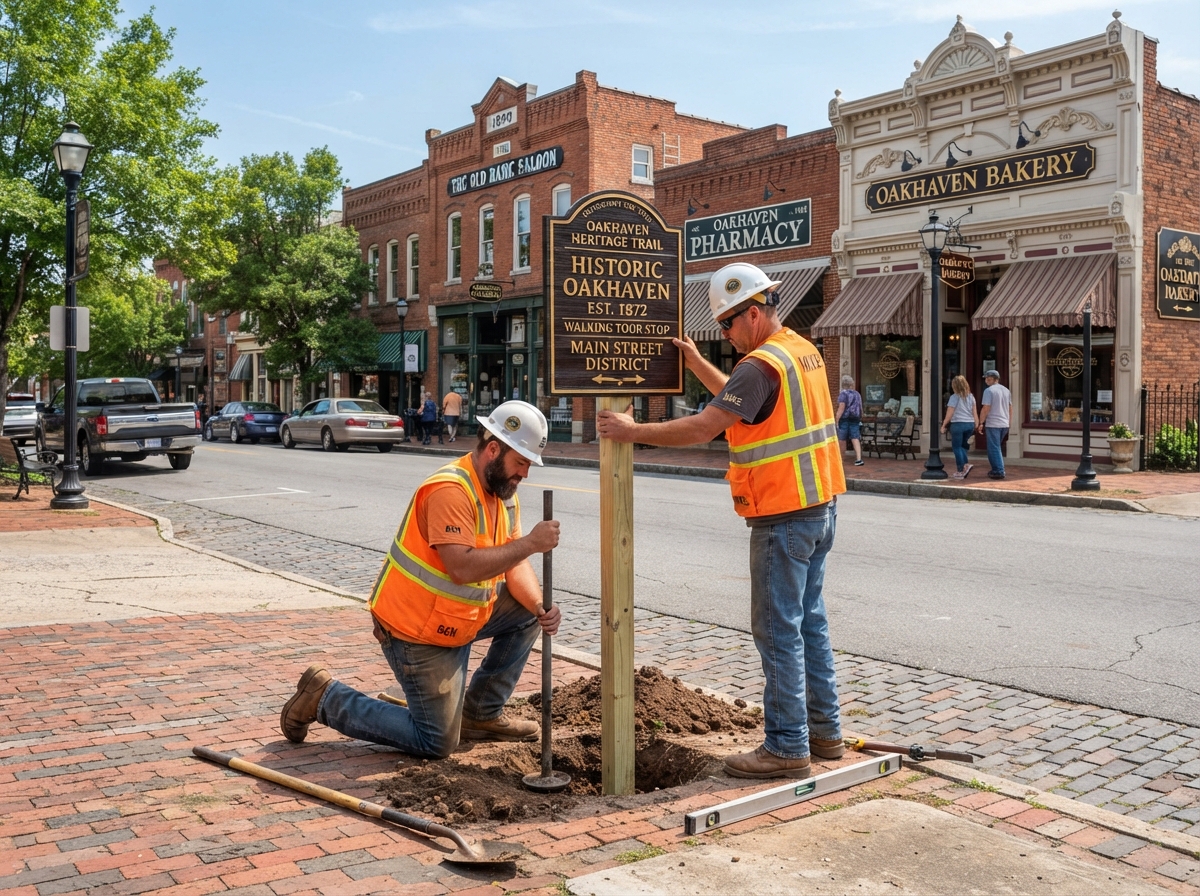
A heritage trail is a physical project in a real community. Municipal participation may therefore be an important part of the process. Depending on the community, municipal responsibilities may include reviewing proposed locations, approving appropriate installations, coordinating required permissions, coordinating utility or dig-clearance requirements, installing sign posts, installing signs, supporting public communication, and participating in local promotion.
Responsibilities should be agreed upon before installation begins. Jerzoda provides the GPS coordinates for proposed sign locations and supplies the trail signs. The municipality handles local installation responsibilities according to the agreed project process.
The Historical Society's Role
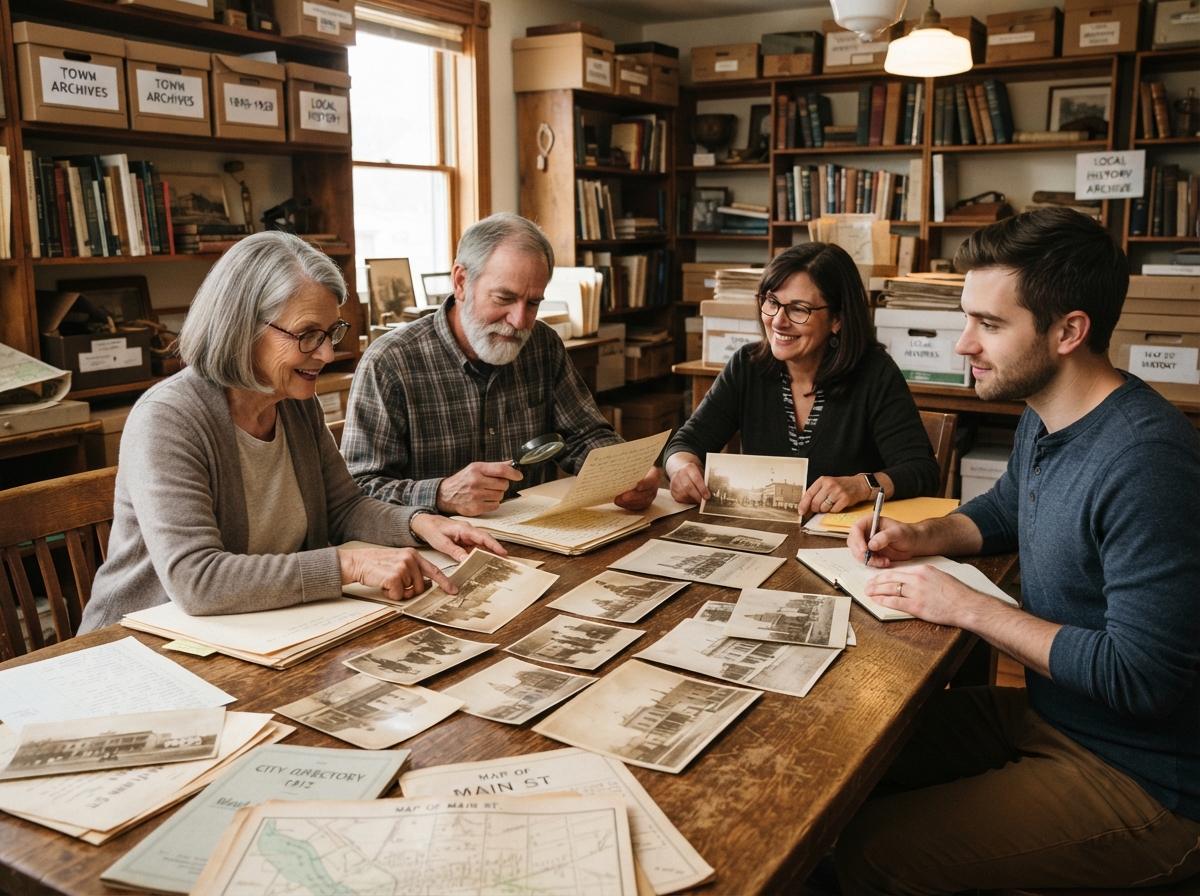
Historical organizations are an important part of responsible heritage interpretation. They can help identify historically significant locations, review preliminary research, correct historical inaccuracies, authenticate historical information, provide relevant photographs, provide local historical knowledge, and identify important community stories.
Jerzoda's role is to develop the trail experience and prepare preliminary research. The historical organization provides the local expertise and historical review. This creates a collaborative model rather than placing the entire historical burden on one organization.
The Chamber's Role
A Chamber of Commerce can be a valuable community partner because local businesses are an important part of the community's visitor experience. A participating chamber may help introduce local businesses to the project, encourage sponsorship participation, promote the trail, encourage Trail Savers participation, help connect the trail with broader community events, and support local business involvement.
Jerzoda's goal is not to make the chamber responsible for building the trail. The chamber's role can be community connection and business participation.
The Community's Role
A heritage trail works best when the community sees it as its own. Community participation can include identifying historic locations, sharing historical knowledge, contributing recollections, supporting the project financially, becoming a Community Founder, promoting the trail, participating in events, and supporting local businesses participating in Trail Savers.
The Recollections feature provides a moderated place for community members to contribute personal stories connected to trail locations.
A Practical Funding Model
Not every community will use every component. The model is designed to be flexible.
Jerzoda
- Trail development
- Preliminary research
- Digital experience
- Digital historian
- Physical trail signs
- GPS installation locations
- Project coordination
Municipality
- Approvals
- Local coordination
- Dig clearance
- Posts
- Installation
Historical Organization
- Historical review
- Authentication
- Photographs
- Local knowledge
Chamber / Community Organizations
- Business involvement
- Community involvement
- Promotion
Local Businesses
- Founding sponsorships
- Trail Savers participation
- Community Founder badge locations
Community
- Community Founder participation
- Recollections
- Civic support
Potential Outside Funding
- Applicable grants
- Tourism funding
- Preservation funding
- Other eligible sources
Why a Shared Funding Model Can Work
A community heritage trail can represent something different to each participant. For a municipality, it can be a way to interpret local history. For a historical society, it can provide another way to share historical information. For a chamber, it can create another community experience connected to local businesses. For a business, sponsorship can provide a visible connection to the project. For residents, it can become an expression of civic pride. For visitors, it can provide a reason to explore.
That shared value is what makes a community-funded project possible.
The Goal Is Not to Make One Organization Pay for Everything
Jerzoda's model is designed around shared community participation. Instead of asking "Who is going to pay for this?" the conversation can become "Who benefits from this, and how can each participant contribute?"
That might mean a municipality handles installation, a historical society provides historical review, businesses become founding sponsors, residents participate as Community Founders, the chamber helps connect businesses, a tourism organization supports promotion, a grant may support an eligible portion of the project, and Jerzoda handles the trail development and technology. The exact arrangement depends on the community.
Funding Should Follow the Community's Capacity
Not every town has the same budget. Not every historical society has the same resources. Not every chamber has the same number of businesses. A good heritage trail project should account for those differences.
Jerzoda's goal is to make the initial assessment simple and determine whether the project is practical before a community commits significant resources. The first step is not writing a grant application. The first step is determining whether there is a viable trail.
Walton Heritage Trail: The Working Model
The Walton Heritage Trail in Walton, New York provides the working example of the Jerzoda approach. The Walton project involved identifying historical locations, developing the route, conducting preliminary research, working with the community, securing funding, coordinating physical installation, providing the trail signage, and creating the digital heritage experience.
The project demonstrated that a community heritage trail can be built through coordinated participation. Learn more about the Heritage Trails program or explore historic walking tours.
Could Your Community Fund a Heritage Trail?
Before worrying about funding, determine whether your community has the foundation for a viable trail. Jerzoda generally looks for seven or more appropriate historical locations within approximately a two-mile walking area, reasonable pedestrian accessibility, a logical route, historical information that can be researched and authenticated, and community organizations willing to participate.
Jerzoda provides the initial assessment at no charge. If the community appears to qualify, the next step is discussing the project scope and determining what funding and participation model makes sense locally. You can also learn about historic preservation and interpretation, heritage tourism and visitor experiences, or downtown revitalization and placemaking.
Frequently Asked Questions About Heritage Trail Funding & Grants
How are heritage trails funded?
Heritage trails can potentially be funded through a combination of municipal participation, local business sponsorships, community participation, tourism or preservation organizations, civic organizations, private contributions, and applicable grants. The appropriate funding model depends on the community and project.
Are there grants for heritage trails?
Grant opportunities may exist for projects involving historic preservation, heritage tourism, historic interpretation, cultural resources, community development, or related activities. Programs and eligibility requirements change, so communities should verify current opportunities directly with each funding organization.
Are there grants for historic markers?
Some funding programs may support historic markers, historic interpretation, preservation, or cultural resources. Eligibility varies by program, and communities should verify current requirements before relying on a particular grant.
Can a municipality pay for a heritage trail?
A municipality may choose to participate in funding a heritage trail, depending on its budget, priorities, approvals, and applicable laws and policies. Jerzoda can provide the project scope so the community can determine how it wants to participate.
Can local businesses sponsor a heritage trail?
Yes. Jerzoda's model includes local business Founding Sponsors who help support the trail. Sponsorship details should be established for each community.
What is Trail Savers?
Trail Savers is a program for participating trail sponsors that provides a way for local businesses to offer visitors a savings incentive while they explore the community.
What are Community Founder badges?
Community Founder badges provide residents with an opportunity to participate in supporting their community's heritage trail through participating local businesses by donation. Program details may vary by community.
Does Jerzoda write grant applications?
Jerzoda's role is to provide the trail-development system, signage, digital experience, and project coordination. Communities should determine their own grant eligibility and application process directly with the funding organization.
Does Jerzoda guarantee grant funding?
No. Jerzoda cannot guarantee that a community will qualify for or receive a particular grant.
Does a community have to receive a grant to build a heritage trail?
No. A community may consider other funding approaches such as municipal participation, local business sponsorships, community participation, civic support, or other appropriate funding sources.
What does the municipality handle?
The municipality's responsibilities can include appropriate local approvals, coordination, dig-clearance requirements, posts, and physical sign installation. Exact responsibilities should be agreed upon before the project begins.
What does Jerzoda provide?
Jerzoda provides the initial assessment, route development, preliminary historical research, digital heritage experience, digital historian, physical trail signs, GPS locations for proposed installations, and project coordination as established for the project.
How many historic locations are needed?
Jerzoda generally looks for at least seven appropriate historical locations within approximately a two-mile walkable area. Each community is assessed individually.
Does Jerzoda provide a free assessment?
Yes. Jerzoda provides an initial heritage trail assessment at no charge to determine whether a community appears to meet the basic criteria for a potential trail.
Bring a Heritage Trail to Your Community
Jerzoda provides an initial assessment at no charge. Let's talk about your community.
Talk to Jerzoda